Dublin CA First-Time Buyer Guide to Starter Homes
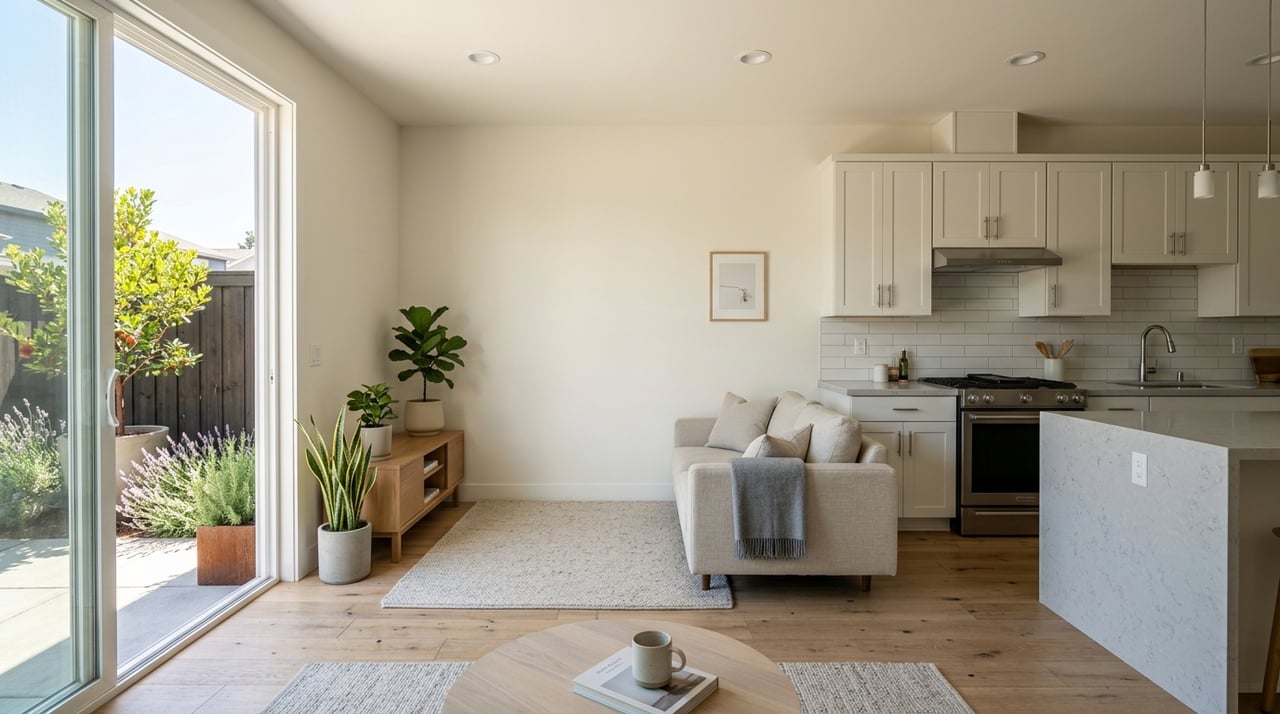
Buying your first home in Dublin can feel like aiming at a moving target. Prices are high, inventory can vary by property type, and the monthly cost is often more than just your mortgage. The good news is that if you understand where Dublin’s real entry points are, how HOA costs work, and which commute features matter most, you can shop with a clearer plan and a lot less stress. Let’s dive in.
In Dublin, the citywide median sale price was $1,324,208 in May 2026. That number is useful for market context, but it does not tell the full story for first-time buyers. In practice, many starter-home searches in Dublin begin with condos, townhomes, and smaller homes rather than the overall median.
Current active listing examples show why. Entry-level options included a 2-bedroom, 2-bath condo around $650,000 and a 2-bedroom, 2.5-bath home at $779,000, while a 3-bedroom, 2.5-bath home was listed around $1,029,000. Detached homes in current listings were generally starting in the low $1 million range, with examples around $1,149,000 and $1,175,998.
If you are trying to set realistic expectations, it helps to break Dublin into broad price bands:
That does not mean every listing will fit neatly into those buckets. It does mean attached housing is often the clearest first step for buyers who want to enter Dublin without stretching to the citywide median.
Many first-time buyers focus on the purchase price first, then treat everything else as a smaller detail. In Dublin, that can lead to surprises. If you are considering a condo or townhome, your real monthly housing cost may depend heavily on HOA dues, possible assessments, and post-closing tax changes.
That is especially important because HOA communities are common in the kinds of homes many first-time buyers target here. A lower purchase price can still turn into a higher-than-expected monthly payment once community fees and ownership costs are added in.
In California, HOAs make and enforce rules for communities such as condominiums and planned developments. Owners generally must join the association and pay regular fees and, in some cases, additional assessments.
Regular assessments typically fund day-to-day operations and reserves. Special assessments are generally used for larger or unexpected costs, such as major repairs or replacements. For you as a buyer, the takeaway is simple: do not judge affordability by mortgage alone.
For condo and townhome purchases, California Civil Code 4525 requires the seller to provide important HOA records. These include governing documents and a written statement covering current regular and special assessments, unpaid assessments or fines, pending rule violations, and certain other association records.
California Civil Code 4530 also allows the association to charge a reasonable fee to produce those documents. That matters because this paperwork is a standard part of understanding what you are buying into, not an optional extra.
California Civil Code 5570 requires an assessment and reserve funding disclosure summary. That summary shows the regular assessment, any scheduled assessments, whether reserves are projected to cover major components over the next 30 years, and the reserve funding percentage.
In plain English, this helps you see whether the HOA appears prepared for future repairs. If reserves are weak, the risk of higher costs later may be greater. That is why two homes with similar asking prices can feel very different from a monthly budget standpoint.
Another cost first-time buyers sometimes miss is supplemental property tax timing. California Civil Code 1102.6c requires disclosure that a change in ownership can trigger one or two supplemental property tax bills after closing.
That does not mean something is wrong. It means you should plan for that possibility in your cash reserves so a post-closing bill does not catch you off guard.
Before you decide a home fits your budget, look at:
When you build your budget this way, you get a truer picture of what living in Dublin will actually cost month to month.
Dublin is not just about housing stock. One of its strongest advantages is location. The City of Dublin says the city sits at the crossroads of Interstates 580 and 680, and it has two BART stations in service.
That matters because many buyers are not only comparing homes. They are also comparing commute options, daily convenience, and how much flexibility a location gives them over time.
Dublin is served by the Dublin/Pleasanton and West Dublin/Pleasanton BART stations. The city also has Wheels bus and paratransit service throughout Dublin, Pleasanton, Livermore, and parts of unincorporated Alameda County.
Instead of thinking about commute in a vague way, use concrete search filters like these:
This is one reason Dublin often stays on first-time buyers’ short list. It offers suburban housing choices with strong transit and freeway access built into the equation.
For many first-time buyers, this is the real Dublin decision. Not because one option is always better, but because each one affects your budget, maintenance, and flexibility in different ways.
A condo or townhome may offer a lower entry price than a detached home. In Dublin, that can be the difference between getting into the market now and waiting longer to save.
Attached homes often make the most sense if you want:
The tradeoff is that HOA costs and community rules become a bigger part of the decision. That is why reviewing disclosures carefully matters so much.
Detached homes in Dublin are still possible, but current listings suggest many begin in the low $1 million range. If your budget reaches that level, you may gain more independence from HOA structures, depending on the property.
Still, higher purchase price does not automatically mean better fit. You want the home type that supports your monthly comfort level and long-term goals, not just the largest property you can qualify for.
If Dublin feels close to your limit, it helps to compare it with nearby markets. Current May 2026 median sale prices show Dublin at $1,324,208, Livermore at $1,149,312, Pleasanton at $1,494,106, and San Ramon at $1,574,558.
That places Dublin in the middle of the Tri-Valley price spectrum. It is generally more expensive than Livermore, but less expensive than Pleasanton and San Ramon.
| City | Median Sale Price | General Takeaway |
|---|---|---|
| Dublin | $1,324,208 | Mid-range Tri-Valley option |
| Livermore | $1,149,312 | Lower price floor among these cities |
| Pleasanton | $1,494,106 | Higher than Dublin |
| San Ramon | $1,574,558 | Highest of this group |
If you want to stay in the Tri-Valley but need a lower price floor, Livermore may be worth comparing. If you want to balance transit access with pricing that is generally below Pleasanton and San Ramon, Dublin may remain a strong fit.
This is where your priorities matter most. If commute flexibility is a major driver, Dublin’s access to BART and key freeways may justify a higher budget than another market with a lower median price.
The right questions can protect both your budget and your peace of mind. In Dublin, this is especially true for attached homes and any property where commute value is part of the reason you are buying.
Ask practical questions like:
These questions help turn a listing from “looks good online” into “fits my real life.” That shift is where smart first-time buying begins.
Dublin can be a strong first-home market if you go in with the right expectations. The biggest wins usually come from setting a realistic home-type target, building a full monthly budget, and choosing a location that supports your daily routine as much as your long-term plans. If you want calm, local guidance as you compare condos, townhomes, and starter homes in the Tri-Valley, Realm Real Estate is here to help.
Stay up to date on the latest real estate trends.

Real Estate for Seniors
How rising housing costs, caregiving responsibilities, and multigenerational living are reshaping family life in Concord and Contra Costa County

Real Estate for Seniors
Understanding the timeline for caring for aging parents and adult children in Concord and Contra Costa County
You’ve got questions and we can’t wait to answer them.